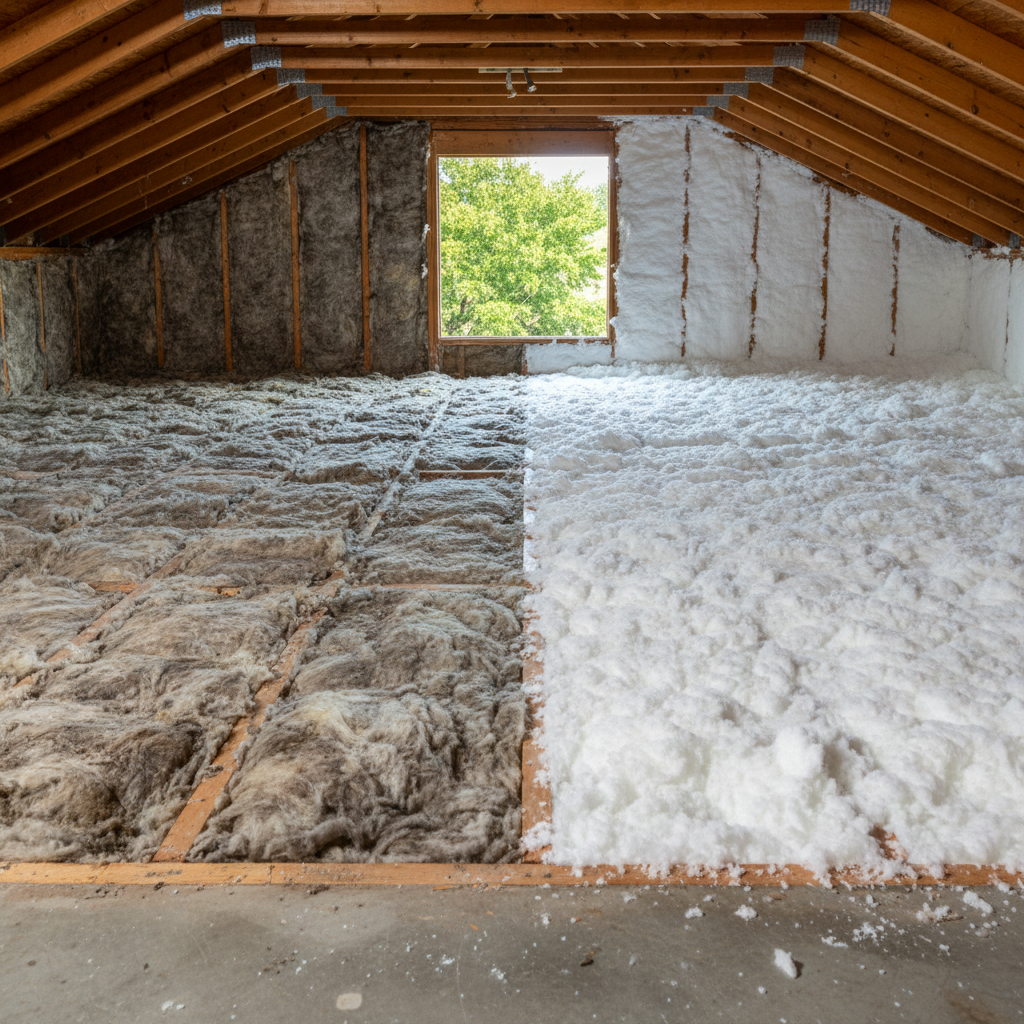
Alright, let's talk insulation. Specifically, the blown-in stuff. When you're looking to upgrade your attic or walls, you're usually going to hear about two main players: blown-in cellulose and blown-in fiberglass. Both are good, but they're not the same, and what works best for your Dallas home might surprise you.
What's the Difference, Anyway?
You've got two common types of loose-fill insulation, and they're made from different materials. Fiberglass is exactly what it sounds like – tiny glass fibers, usually made from recycled glass. Cellulose, on the other hand, is mostly recycled paper products, like newspapers, treated with fire retardants. Both get blown into your attic space or wall cavities using a big hose and a machine, filling in all those nooks and crannies better than batts ever could.
Cost: What's the Damage?
This is usually the first question folks ask, and it's a fair one. Generally, blown-in cellulose tends to be a little less expensive per square foot than blown-in fiberglass. We're not talking about a huge difference, but it can add up on a bigger job. Part of that comes down to the raw materials – recycled paper is often cheaper to source and process than glass fibers. Don't just go for the cheapest option, though. You've got to look at the whole picture.
Durability and Performance in Texas
This is where things get interesting, especially for us here in Dallas. Our summers are brutal, and our soil, with all that expansive clay, can shift foundations, which means cracks can form. You need insulation that can handle it.
- Fiberglass: It's naturally resistant to moisture, which is a big plus. If you get a small leak in your roof, fiberglass is less likely to absorb water and clump up. It's also inorganic, so it doesn't really appeal to pests. However, fiberglass can settle over time, especially if it's not installed densely enough. When it settles, you lose some of that R-value, meaning it's not insulating as well.
- Cellulose: This stuff is dense. Really dense. That density is great for stopping airflow, which is a huge part of insulation's job. It also has a higher R-value per inch than fiberglass, meaning you get more insulating power in the same space. The fire retardants also make it pretty resistant to pests and mold. The main concern with cellulose is moisture. If it gets wet, it can absorb water and compact, losing its effectiveness. But here's the thing: if you have a leak bad enough to soak your insulation, you've got bigger problems than just your insulation. You need that leak fixed ASAP, regardless of what's up there.
For Dallas, with our extreme temperature swings, I often lean towards cellulose for attics. Its density and higher R-value per inch really help keep those scorching summer temps out of your living space. It's also great for sound dampening, which is a nice bonus if you're near a busy road.
Maintenance and Appearance
Honestly, once it's blown in, you shouldn't really be