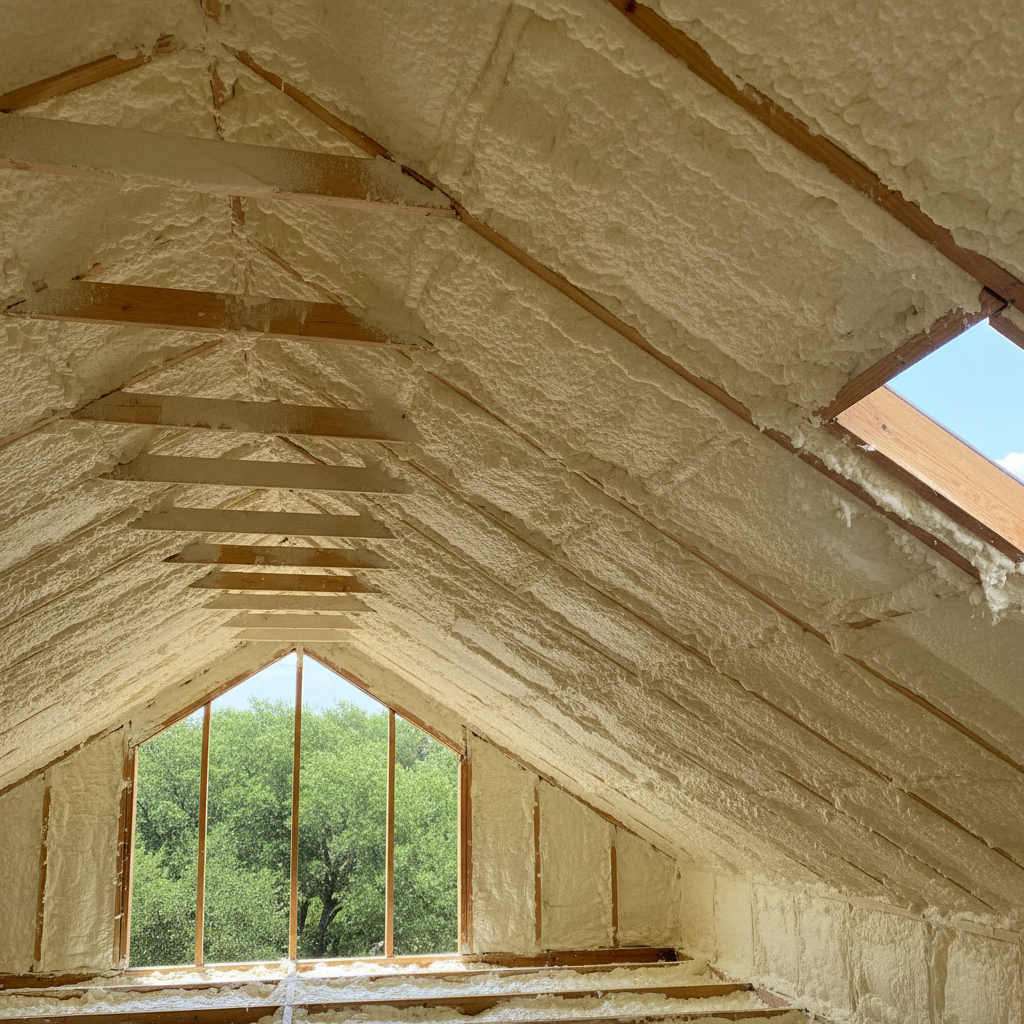
Alright, let's talk about closed-cell spray foam. Everyone wants to know the bottom line, right? What's it gonna cost me? It's not as simple as a flat rate per square foot, but I can give you a solid idea of what to expect here in Dallas.
First off, closed-cell isn't cheap, but it's worth every penny if you're looking for serious energy efficiency, structural integrity, and moisture control. It's a premium product, and you're paying for performance that fiberglass or open-cell just can't match.
What Drives the Price Tag?
A few things really push the cost up or down. You need to understand these before you even get a quote.
- Thickness (R-Value): This is probably the biggest factor. Closed-cell typically gives you an R-value of R-6 to R-7 per inch. Most attics in Dallas, especially with our brutal summers, need at least R-30, sometimes R-38. That means 5-6 inches of foam. Walls might get 2-3 inches for R-12 to R-18. The more inches, the more material, the higher the cost.
- Square Footage: Obvious, right? A 1,500 sq ft attic is going to cost less than a 3,000 sq ft attic. But it's not just the floor area; it's the area of the surfaces being sprayed. If you're insulating the roof deck, we're talking about the slope and area of that surface, not just the attic floor.
- Accessibility & Prep Work: This is a big one folks often forget. Is your attic easy to get into? Is it full of old, nasty insulation that needs to be removed? Is there a ton of existing wiring, plumbing, or ductwork that needs to be worked around or protected? All that extra labor for prep, masking, and maneuvering adds to the bill. If we have to crawl through tight spaces or deal with a super dusty, dirty environment, that takes more time and effort.
- Project Size: Larger projects often get a slightly better per-square-foot rate because we can be more efficient with our equipment and crew. A small patch job will have a higher per-unit cost than a whole-house insulation job.
- Market & Material Costs: Like anything else, the cost of the chemicals fluctuates. And in a growing market like Dallas, demand can affect pricing too.
Typical Cost Ranges in Dallas
Let's get down to some numbers. Again, these are estimates, but they're based on what I see day in and day out here at Efficiency Spray Foam Insulation Dallas.
For closed-cell spray foam, you're generally looking at $2.00 to $3.50 per board foot. What's a board foot? It's one square foot, one inch thick. So, if you need 5 inches of foam, that's 5 board feet per square foot of surface area.
Let's break that down for some common applications:
- Attic (Roof Deck): For a typical Dallas attic, insulating the underside of the roof deck to R-30 (about 5 inches of foam), you might be looking at $10.00 to $17.50 per square foot of roof deck surface area. So, for a 2,000 sq ft roof deck, that's a range of $20,000 to $35,000. This often includes some basic prep and clean-up.
- Exterior Walls: If you're doing new construction or a major remodel and want closed-cell in your wall cavities (say, 2-3 inches for R-12 to R-18), expect around $4.00 to $10.50 per square foot of wall surface area.
- Crawl Spaces/Slab Edges: For insulating rim joists or crawl space walls, which is crucial for preventing moisture and drafts, it might be in the range of $5.00 to $12.00 per linear foot or per square foot depending on the specific application and thickness.
Remember, these are ballpark figures. The actual quote will depend on all those factors I mentioned above.
What Should a Quote Include?
When you get a quote, make sure it's detailed. A good quote from a reputable company like ours should clearly state:
- The total square footage being sprayed.
- The thickness (in inches) of the foam.
- The R-value you'll achieve.
- Any prep work included, like old insulation removal or masking.
- Clean-up procedures.
- Warranty information.
- Total cost, with no hidden fees.
Don't just look at the bottom line. Compare apples to apples. If one quote is significantly lower, find out why. Are they using less material? Cutting corners on prep? Using a cheaper, inferior product?
How to Avoid Overpaying
Here's my advice, plain and simple:
- Get Multiple Quotes: Don't just go with the first guy. Get at least three detailed quotes.
- Ask Questions: If something isn't clear, ask. A good contractor will be happy to explain everything.
- Check References & Reviews: See what other Dallas homeowners say about them. Look for companies with a solid track record.
- Understand the Scope: Make sure every quote covers the exact same scope of work. If one includes insulation removal and another doesn't, that's a huge difference.
- Don't Fall for Lowballers: If a price seems too good to be true, it probably is. You don't want a shoddy job that you'll have to pay to fix later. Especially in Dallas, where our expansive clay soils can cause foundation issues, you want to make sure your home's envelope is sealed tight to prevent moisture problems that can exacerbate those issues.
- Look for Experience: Spray foam isn't a DIY job, and it's not something a general handyman should tackle. It requires specialized equipment and trained applicators. You want someone who's been doing this for a while and knows the nuances of getting a perfect, consistent application.
Closed-cell spray foam is a big investment, but it pays off in spades with lower energy bills, a more comfortable home, and better indoor air quality. Do your homework, ask the right questions, and you'll get a fair price for a job well done.